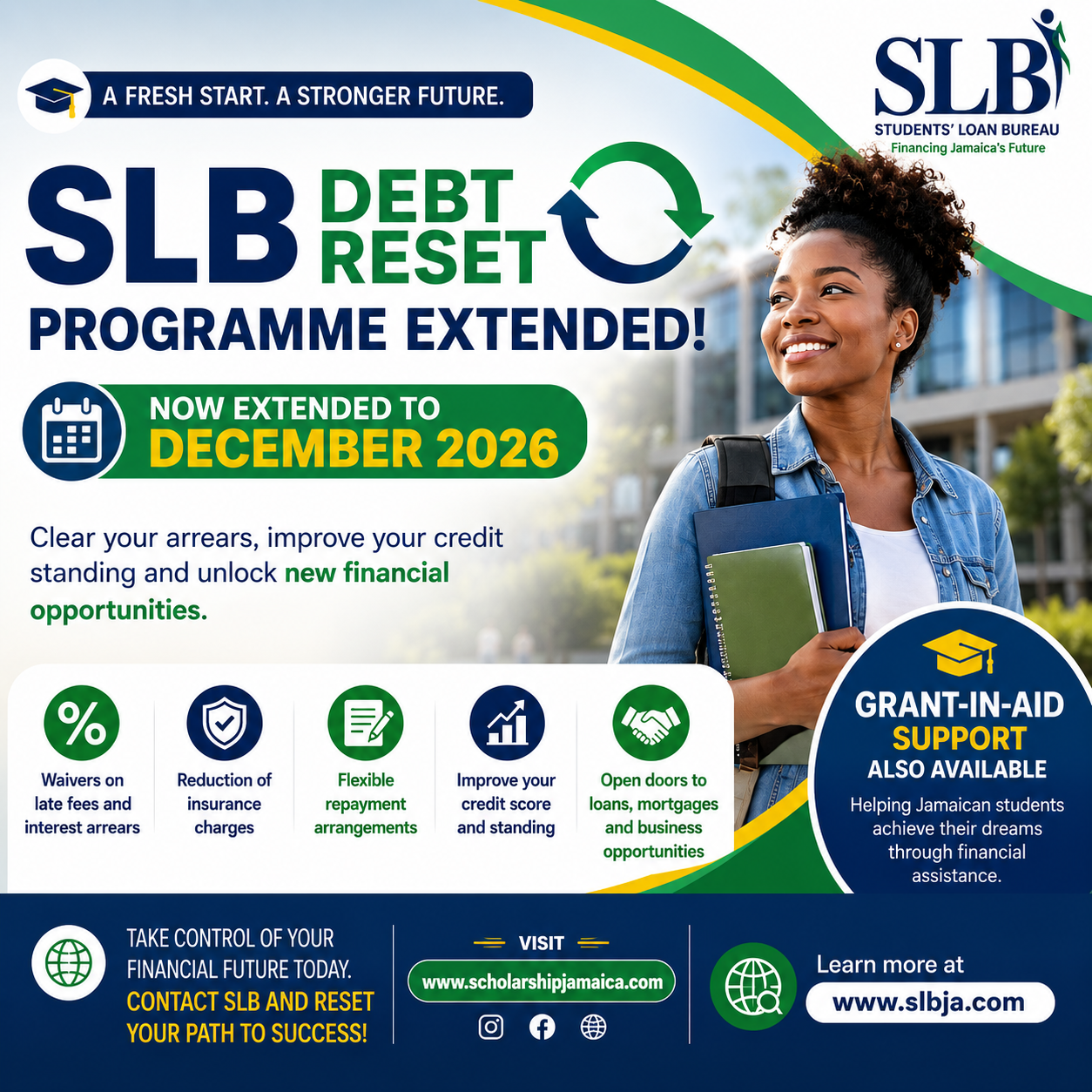

For thousands of Jamaicans who relied on student loans to pursue higher education, repaying those loans can sometimes become financially overwhelming. Rising living costs, unemployment, underemployment, and unexpected personal challenges have left many borrowers struggling to keep up with payments. In response, the Students’ Loan Bureau (SLB) Jamaica has extended its Debt Reset Programme through December 2026, giving borrowers another opportunity to regularize their accounts, improve their credit standing, and regain financial stability.
According to information released by the Jamaica Information Service (JIS), the programme is designed to help borrowers clear arrears through structured repayment arrangements and financial relief measures. The initiative has become increasingly important as many Jamaicans seek access to mortgages, car loans, business financing, and other forms of credit that require a positive credit history.
Why the SLB Debt Reset Programme Matters
The Student Loan Bureau plays a major role in Jamaica’s education system by helping students finance tertiary education locally and overseas. However, like many loan systems worldwide, repayment challenges can negatively affect borrowers’ financial profiles if accounts become delinquent.
SLB Executive Director Nickeisha Walsh explained in a recent interview with JIS that many borrowers only become aware of their SLB repayment issues when applying for loans at other financial institutions.
Because the SLB reports repayment information to credit bureaus, persons with unpaid balances or long-standing arrears may receive poor credit ratings. This can affect their ability to secure financing for homes, vehicles, businesses, or even personal loans.
Ms. Walsh emphasized that borrowers who take advantage of the SLB Debt Reset Programme and maintain regular repayments can significantly improve their credit standing over time. A stronger credit score increases financial opportunities and reduces barriers when applying for future loans.
This is particularly important in Jamaica’s modern financial environment, where banks and lending institutions rely heavily on credit reports to assess risk before approving loans.
How the Debt Reset Programme Works
The SLB Debt Reset Programme was developed to help borrowers return to good standing without facing overwhelming penalties and accumulated charges.
Under the programme, eligible borrowers may receive:
- Waivers on late fees
- Reduction or removal of insurance charges
- Relief on accumulated interest arrears
- Flexible repayment arrangements
- Opportunities to restructure repayment plans
The initiative allows customers to negotiate manageable repayment schedules based on their financial circumstances. Borrowers who remain consistent with payments can gradually rebuild their credit profile while reducing financial stress.
Originally scheduled to end in April 2026, the programme was extended to December 2026 due to continued public interest in the SLB Debt Reset Programme and ongoing economic challenges faced by many Jamaicans.
The extension provides borrowers with additional time to take corrective action before further damage is done to their credit records.
- Jamaica Slavery Reparation: King Charles Refers Historic Petition to Privy Council
- Stephen Francis Scholarships: Government Announces UTech Student-Athlete Award
- FHC Foundation Scholarships 2026 | Complete Guide for Jamaican Students
- Over J$15 Million in PEP Scholarships and Bursaries in Jamaica
- First Heritage Co-op Cultd (FHC) Renald Mason Scholarships
Credit Scores and Financial Opportunities
Many Jamaicans underestimate how much student loan repayment affects their overall financial health. Once a borrower becomes delinquent, that information can appear on credit reports used by banks and lending agencies.
A poor credit score can result in:
- Loan application denials
- Higher interest rates
- Difficulty obtaining mortgages
- Challenges accessing business loans
- Reduced financial flexibility
According to the JIS report, borrowers who regularize their accounts through the SLB Debt Reset Programme place themselves in a stronger financial position for the future.
Ms. Walsh noted that many financial institutions advise customers to contact the SLB and clear arrears before new loans can be approved. This demonstrates how closely linked educational debt has become with overall financial credibility.
For young professionals, entrepreneurs, and graduates hoping to invest in homes or businesses, maintaining good standing with the SLB can be extremely beneficial.
Grant-in-Aid Assistance in Jamaica
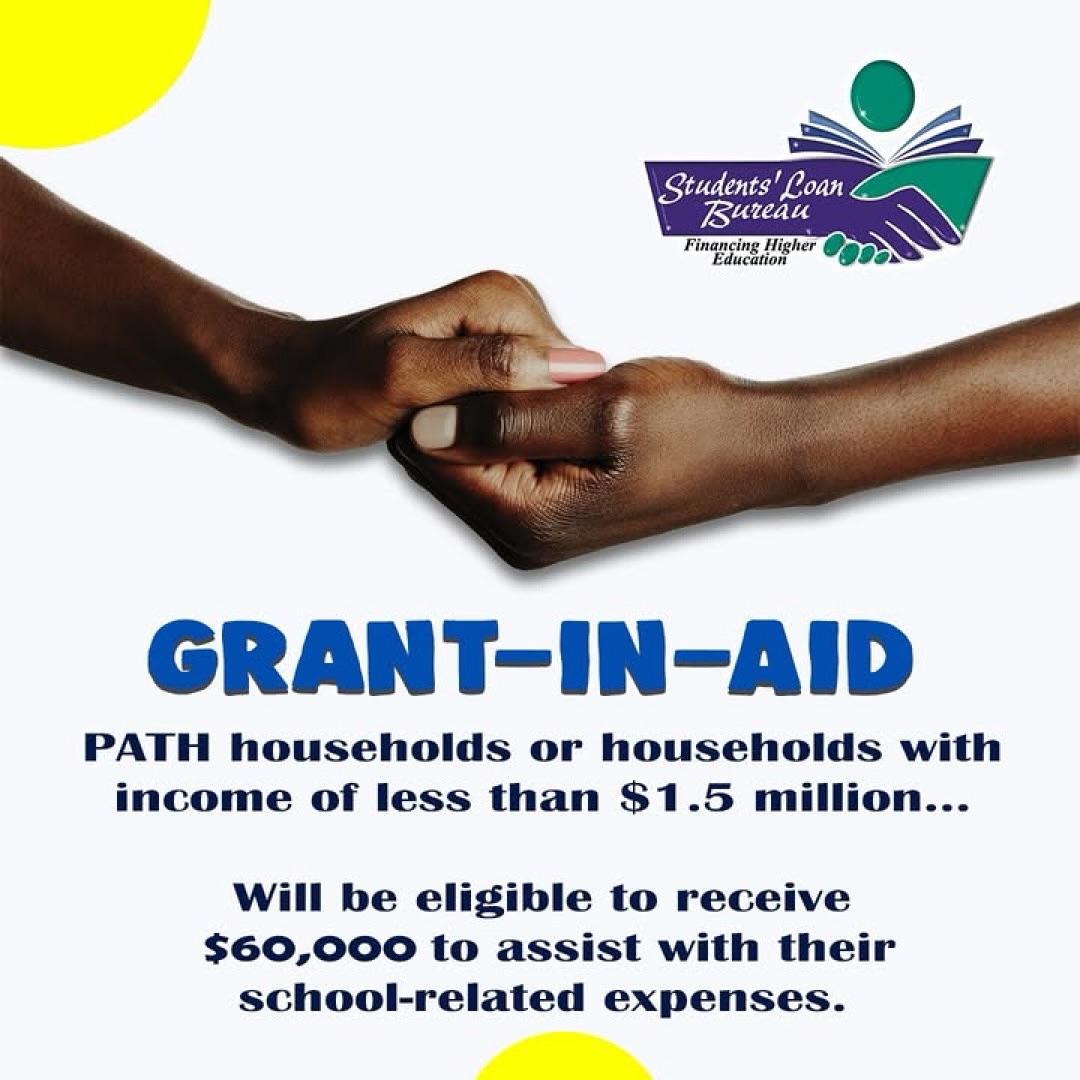
In addition to student loans, many Jamaicans are unaware that the SLB also administers grant-in-aid support programmes that help students from financially challenged backgrounds.
Grant-in-aid funding is designed to provide financial assistance that does not require repayment under specific conditions. These grants are especially valuable for students pursuing tertiary education but facing economic hardship.
The Jamaican Government, through partnerships with educational agencies and institutions, continues to support students through various forms of educational financing assistance, including grants, bursaries, scholarships, and tuition support initiatives.
Grant-in-aid programmes in Jamaica may assist with:
- Tuition expenses
- Books and educational materials
- Transportation support
- Living expenses in some cases
- Special assistance for vulnerable students
Students attending institutions such as the University of the West Indies, University of Technology Jamaica, and Caribbean Maritime University often explore SLB funding and grant opportunities to reduce the financial burden of higher education.
Educational grants are especially important in Jamaica because many families struggle to fully finance tertiary education on their own. Rising tuition costs and economic pressures have made financial assistance programmes increasingly necessary.
Students are encouraged to regularly check the official SLB website and educational institutions for updates on available grant programmes, application deadlines, and eligibility requirements.
SLB’s Role in Educational Development
For decades, the Student Loan Bureau has helped thousands of Jamaicans pursue professional careers in nursing, medicine, education, business, engineering, and other fields. The institution remains one of the country’s most important educational financing agencies.
The Bureau’s services have allowed many students to attend universities and colleges that may otherwise have been financially inaccessible.
As Jamaica continues focusing on workforce development and economic growth, access to higher education financing remains critical. Programmes like the Debt Reset initiative not only help borrowers manage debt but also contribute to long-term economic participation and financial literacy.
By encouraging repayment compliance while offering realistic financial relief, the SLB Debt Reset Programme is attempting to balance accountability with compassion during difficult economic conditions.
Why Borrowers Should Act Quickly
Borrowers who delay addressing their SLB accounts risk accumulating additional penalties and further credit complications. Financial experts often recommend resolving delinquent student loans early to avoid long-term damage to credit histories.
The Debt Reset Programme represents an opportunity for borrowers to:
- Clear outstanding arrears
- Improve credit scores
- Restore financial credibility
- Access future financing opportunities
- Reduce accumulated penalties
For many Jamaicans, this SLB Debt Reset Programme could become the first step toward rebuilding financial independence.
Individuals interested in participating are encouraged to contact the Students’ Loan Bureau Jamaica directly for eligibility details, repayment arrangements, and programme requirements.
As economic conditions continue to affect families across Jamaica, initiatives like the SLB Debt Reset Programme and grant-in-aid support systems remain important tools for educational advancement and financial recovery.







Comments are closed