

A strong 2026 Scholarship Application isn’t just about being “smart” or having good grades—it’s about being prepared, organized, and strategic. Many Jamaican scholarships and bursaries (and plenty of international awards) reject applications for the same reasons every year: missing documents, weak references, generic essays, late submission, and unclear proof of need.
This guide breaks your process into ten practical steps, combining Jamaica-specific requirements (like TRN, certified transcripts, acceptance letters, references, and institutional processes) with global best practices used by major scholarship programs and universities.
Step 1: Start with a “Master Scholarship List” (and apply to categories, not just names)
Before you write a single essay, build a spreadsheet or notes page that tracks:
- Scholarship name + link
- Eligibility (Jamaican national / CARICOM / programme level / GPA)
- Deadline + interview dates
- Required documents
- Essay prompts + word count
- Referees required
- Submission method (online, email, hard copy)
Why this matters in Jamaica: different programs can require different document sets and submission styles. For example, CHASE scholarship forms explicitly include a checklist (photo, acceptance letter, recommendations, transcript, statement of accounts/invoice, essay). chase.org.jm
Step 2: Confirm 2026 Scholarship Application eligibility early (GPA, level, nationality, and programme fit)
Many awards look simple until you see the fine print. For UWI Mona scholarships and bursaries, the Office of Student Financing notes that most donors expect at least a 3.0 GPA (with some awards higher; some lower). mona.uwi.edu
For some UWI Global Campus bursaries/scholarships, eligibility can include CARICOM nationality, specific credits completed, and GPA thresholds. UWI Global Campus
Action move: highlight your top 10 opportunities, then write a one-line eligibility statement for each (e.g., “Jamaican national, accepted to tertiary programme, meets GPA requirement, demonstrates financial need”).
Step 3: Get your acceptance/registration letter first (it unlocks everything)
A common Jamaica-specific bottleneck is waiting too late for proof of acceptance/registration.
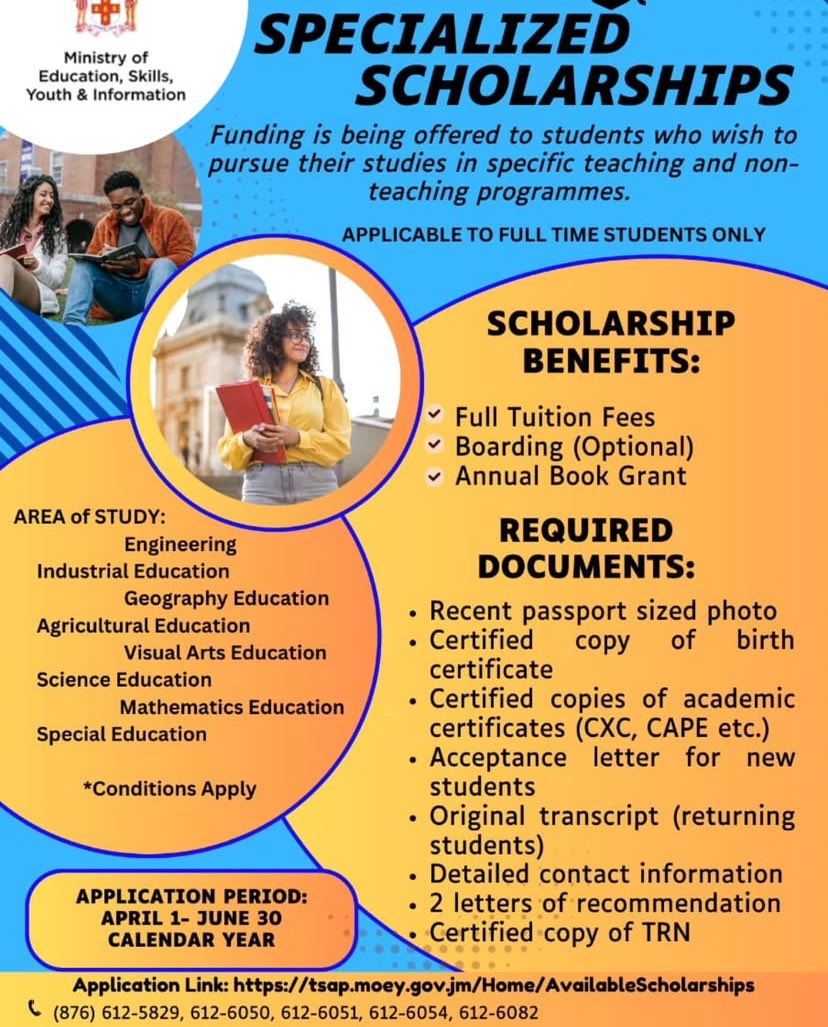
For the Ministry of Education’s Specialized Scholarship / TSAP-related listings, requirements commonly include valid evidence of acceptance/registration and it may be required for interviews. tsap.moey.gov.jm
CHASE scholarship checklists also typically include an acceptance letter. chase.org.jm
Power tip: apply to your school/programme early enough that you can attach your acceptance letter to multiple scholarship submissions.
Step 4: Build a “Jamaica-ready” document bundle (certified + current)
For many Jamaican scholarships, your documents are your application. Don’t treat them like an afterthought.
Common Jamaica requirements include:
- Certified transcripts/certificates tsap.moey.gov.jm
- Two reference letters tsap.moey.gov.jm
- Passport-sized photos tsap.moey.gov.jm
- Birth certificate (certified copy) tsap.moey.gov.jm
- TRN tsap.moey.gov.jm
- For CHASE, a statement of accounts/invoice from the school may be required chase.org.jm
Create one folder (Google Drive/Dropbox) named:
2026 Scholarship Application – MASTER FILES
Then subfolders: ID, transcripts, acceptance, references, financials, essays.
Step 5: Choose the right referees for your scholarship application—and make it easy for them to say “yes”
A powerful reference letter is specific, believable, and aligned with the scholarship criteria. Some Jamaica guidance materials even specify the types of referees that may be acceptable (e.g., JP, pastor, senior police officer, principal, guidance counsellor). Ministry of Education
UWI Mona also stresses completing referee processes properly (including referee report/affidavit steps) and warns that incomplete applications may not be processed. mona.uwi.edu
Referee toolkit (send in one email/WhatsApp message):
- Scholarship name + deadline
- 5–7 bullet points of your achievements
- Your CV (1 page is fine)
- Your draft personal statement
- The scholarship criteria you want emphasized (leadership, need, service, academics)
Step 6: Write one “core personal statement,” then customize fast
Many students rewrite from scratch each time—wasting energy and producing inconsistent quality. Instead, build one core statement with:
- Your story (background + motivation)
- Proof (achievement + leadership + resilience)
- Purpose (career goal + community impact)
- Fit (why that scholarship)
Multiple scholarship guidance sources emphasize authenticity and making your story memorable—your personal statement is often the heart of the application. College of Staten Island
Top global scholarship programs also emphasize presenting your impact through your resume, essays, and recommendations in a way that clearly shows leadership and purpose. Schwarzman Scholars
Customization rule: keep 70–80% the same, and tailor the final 20–30% to match the scholarship mission and requirements.
Step 7: Use a “proof + metrics” approach (make your application measurable)
Committees love evidence. Replace vague claims with proof:
- “I volunteer” → “I completed 120 hours of community service tutoring math to 12 students.”
- “I’m a leader” → “I led a project that raised J$150,000 and supported 30 students with exam fees.”
- “I’m passionate about nursing” → “I shadowed in a clinic, completed X course, and plan to specialize in community health.”
This matters because some Jamaica scholarship programs have ongoing expectations like maintaining performance or service standards once awarded. Ministry of Education
Step 8: Show financial need clearly in your 2026 scholarship application (without sounding helpless)
In Jamaica, “need” usually requires documentation and clarity. CHASE commonly asks for a statement of accounts/invoice and other supporting documents. chase.org.jm
A strong need paragraph includes:
- Total tuition + fees
- What your family can realistically contribute
- What you already have covered (savings, part-time work, grants)
- The funding gap
- What the scholarship would change (completion, reduced work hours, improved grades)
Keep it factual, respectful, and specific.
Step 9: Submit like a professional (formats, naming, and verification)
This step alone can move you ahead of 50% of applicants.
Submission rules:
- Convert final documents to PDF (unless the form requires Word)
- Use clean file names:
Lastname_Firstname_TRN_Transcript.pdfLastname_Firstname_AcceptanceLetter.pdfLastname_Firstname_2026ScholarshipApplication_Essay.pdf
- If emailing: put scholarship name + your full name in the subject line
- If uploading: screenshot or save confirmation pages
Remember: UWI Mona explicitly warns incomplete applications may not be processed. mona.uwi.edu
Step 10: Quality-check with a “scholarship audit” (then do a calm final review)
Before you hit submit, do a 20-minute scholarship audit:
Checklist
- All required documents attached (photo, acceptance letter, transcripts, references, TRN, etc.) tsap.moey.gov.jm
- Referees submitted what they must submit (if separate) mona.uwi.edu
- Essay answers the prompt directly + includes proof
- Grammar + spelling clean (read out loud once)
- Names and dates consistent across forms
- You followed instructions exactly (format, word count, submission route)
Final power move: ask one trusted person to read your essay once—just for clarity and impact.
Quick recap: Your 2026 Scholarship Application “Power Plan”
- Master list + tracking
- Confirm eligibility early
- Secure acceptance/registration letter
- Build your certified document bundle
- Referees + referee toolkit
- Core personal statement + fast customization
- Proof + metrics
- Clear financial need statement + documentation
- Professional submission (PDFs, naming, confirmation)
- Scholarship audit + final review






Comments are closed