

Hurricane Melissa did more than damage buildings and roads—it disrupted the financing ecosystem that keeps students in school. When a major disaster hits, government budgets shift toward emergency response, families lose income, institutions face repair bills, and donors often redirect grants to relief. The result is a predictable but painful outcome: scholarship constraints—fewer available awards, tighter eligibility, delayed disbursements, and more competition for the same limited funds.
This article breaks down what “scholarship constraints” look like in Jamaica after Hurricane Melissa, why they happen, and what students, schools, and scholarship providers can do to stabilize funding and protect access—using evidence from disaster-and-education research and recent Jamaica-focused reporting.
1) What “scholarship constraints” mean after a disaster
In a post-disaster context, scholarship constraints typically show up in five ways:
- Reduced supply of scholarships (some awards pause, shrink, or discontinue).
- Delayed timelines (application windows shift; decisions and payments take longer).
- Tighter requirements (stricter documentation, narrower eligible programs, more conditions).
- Higher student need (more applicants qualify as “need-based” after income loss).
- Administrative bottlenecks (offices, records, and verification systems are disrupted).
Even when new emergency grants appear, they often focus on short-term stabilization (food, housing, transport, tuition gaps) rather than multi-year scholarships—so the headline relief doesn’t always translate into sustained scholarship availability.
2) The Jamaica-specific funding squeeze after Hurricane Melissa
A. Public financing gets crowded out by recovery spending
After major disasters, governments must fund debris removal, shelter operations, health response, temporary repairs, and reconstruction—often before longer-term education supports can be fully restored. International financing can help, but it typically arrives with specific reconstruction priorities and timelines.
Reuters reported Jamaica secured up to US$6.7 billion in financial assistance from a coalition including CAF, the IMF, the World Bank, CDB, and IDB for reconstruction following Hurricane Melissa (October 2025), alongside domestic allocations and smaller grant components for urgent needs. Reuters
That scale of rebuilding can still create pressure on discretionary education supports—especially scholarship pools that depend on annual budget cycles.
B. School and campus disruption increases costs for students
When schools and universities are damaged, students face added expenses: commuting longer distances, replacing uniforms/books/devices, paying for temporary housing, and managing lost learning time. UNESCO’s Jamaica-related reporting describes widespread impact on learners and education infrastructure and highlights the need for evidence-based recovery planning. UNESCO
Those added costs don’t just raise need—they also change what students can realistically apply for (e.g., relocation constraints, inability to start programs on time).
C. Household income shock reduces “private scholarship” giving
Many local scholarships rely on corporate profits, alumni fundraising, community foundations, and household donations. After a disaster, businesses may experience revenue loss, supply chain disruption, and increased repair costs; families prioritize rebuilding. This can reduce locally funded awards even when student need is rising.
3) What research says: disasters reduce enrollment and shift education investment
A 2024 systematic review on natural disasters and higher education enrollment found disasters negatively affect multiple stages—application, registration, attendance, retention, and graduation—especially among disadvantaged groups.
This matters for scholarship constraints because scholarship programs tend to assume stable enrollment and predictable student pathways. When those pathways break (missed intake, disrupted exams, delayed transcripts), students become “riskier” candidates on paper—even if their potential is unchanged.
In the U.S., research on Hurricane Harvey found household exposure to flooding affected higher-education investment behaviors, including enrollment shifts and changes in financing choices. OUP Academic
While Jamaica’s financing structure differs, the mechanism is similar: disasters change family resources, perceived affordability, and education decisions—tightening scholarship demand and making funding gaps more common.
4) Why scholarships tighten: the 6 big drivers of scholarship constraints
Driver 1: Budget reallocation and delayed disbursement
Even when scholarship lines remain, procurement and payment systems can slow down after a disaster (staff displacement, damaged offices, audits, re-verification). Delays can cause students to lose enrollment slots or accumulate fees.
Driver 2: Donor “mission drift” toward immediate relief
Donors often pivot to emergency needs: food, shelter, and basic supplies. Those are vital—but they can reduce multi-year scholarship commitments unless donors deliberately protect education funding.
Driver 3: Documentation barriers (the hidden constraint)
After disasters, students may lose IDs, transcripts, recommendation contacts, or internet access. Scholarship programs that require extensive documentation can inadvertently exclude the very students most impacted.
Driver 4: Increased competition and “need inflation”
When many households lose income at once, more applicants meet need thresholds. That expands the eligible pool without expanding funding.
Driver 5: Institutional capacity constraints
Universities and scholarship offices may focus on restoring operations first. If student services staff are stretched thin, scholarship processing becomes slower and more selective.
Driver 6: Macro-financial pressures
Disasters can destabilize local economies and tighten credit conditions, which may reduce philanthropic giving and corporate sponsorship. Broader disaster-finance research shows disasters can affect financial stability and risk conditions in ways that influence lending and institutional capacity. MDPI
5) The “emergency aid vs. scholarship” gap
One reason students feel scholarship constraints sharply is that emergency aid is not the same as scholarship funding.
Emergency micro-grants often cover immediate costs (temporary housing, transport, food, replacing devices). For example, the Institute of International Education (IIE) describes emergency student support through micro-grants to cover educational and daily expenses in crisis contexts. IIE
Research on emergency financial relief programs also finds that targeted, rapid aid can improve short-term outcomes for financially vulnerable students. ERIC
These tools are crucial after Hurricane Melissa—but if a country relies heavily on emergency aid while long-term scholarships shrink, students may still be unable to plan multi-year education pathways. In other words: emergency aid helps students survive the semester; scholarships help students finish the degree.
6) What Jamaica can do: practical strategies to reduce scholarship constraints
A. Protect scholarship budgets with “ring-fencing”
For public scholarship programs, one best practice is to ring-fence (protect) a portion of scholarship funding so it doesn’t disappear into general disaster recovery spending. This can be paired with transparent reporting so the public sees education access remains a priority during rebuilding.
B. Convert some awards into “stackable packages”
Instead of one large scholarship for a few students, donors can create stackable awards (tuition + transport + device support) that match post-disaster realities. This reduces dropout risk when costs shift unexpectedly.
C. Simplify verification and expand acceptable documentation
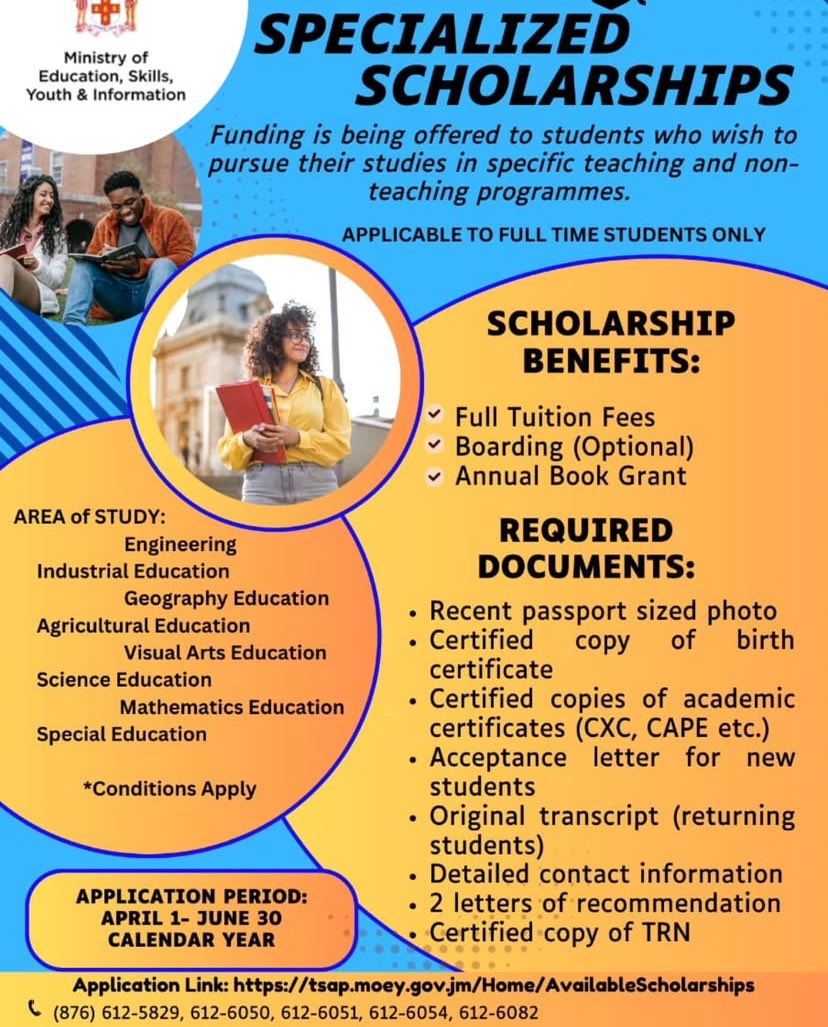
Scholarship providers can temporarily accept alternate documents (school letters, digital records, sworn statements) and provide later verification windows. This reduces exclusion caused by lost paperwork.
D. Prioritize continuity scholarships for currently enrolled students
Post-disaster, the fastest way to protect graduation outcomes is to keep current students enrolled through “continuity scholarships” or emergency retention grants—especially for final-year students.
E. Build “disaster-resilient scholarship pipelines” to reduce scholarship constraints
Long-term, Jamaica can strengthen resilience by encouraging multi-year donor commitments and insurance-linked education funds, similar to regional disaster-related scholarship initiatives. (For example, CCRIF has supported a scholarship program at UWI tied to disaster management capacity-building.) CCRIFF
7) What students should do right now (to navigate scholarship constraints)
If you’re a student applying after Hurricane Melissa, assume competition is higher and timelines may shift. Your best moves:
- Apply earlier than usual and track deadlines weekly.
- Target multiple scholarship types: tuition scholarships, emergency grants, book/device awards, transport stipends.
- Prepare a “disaster impact statement” (2–5 sentences) explaining how the hurricane affected your finances, housing, school access, or documents—clear, factual, and respectful.
- Use “document redundancy”: scan and store key records in secure cloud storage when possible.
- Ask schools about internal relief funds and short-term hardship grants—even small awards can prevent withdrawal.
Conclusion: Scholarship constraints are real—but they’re manageable with the right design
Hurricane Melissa created a classic post-disaster funding scenario: higher student need, disrupted education systems, and competing recovery priorities. Research consistently shows disasters can reduce higher-education participation and strain student pathways, especially for vulnerable groups. PMC
But scholarship constraints don’t have to become a lost generation of learners. With ring-fenced funding, simplified documentation, stackable awards, and continuity grants, Jamaica can protect access while rebuilding—and donors can ensure relief includes long-term education opportunity, not only short-term survival.





Comments are closed